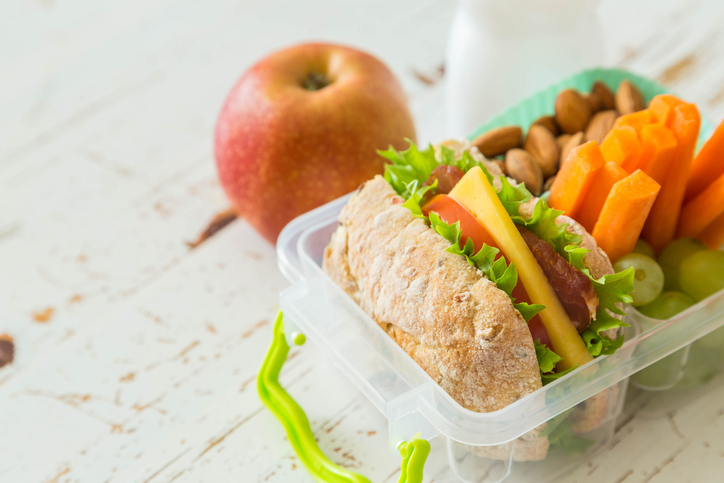
Not sure what healthy food you can take on a train journey? Travelling by train can make it surprisingly easy to fall into the habit of grabbing whatever food is quickest at the station or on the platform. Whether you’re commuting, travelling for business, heading off on holiday or taking a long-distance train journey, there are plenty of ways to eat well. The key is to choose food that is nutritious, portable, easy to eat and suitable for the length of your journey.
So, what is the best healthy food to take on a train? Let me help you choose with some great suggestions…
What healthy food can you choose that suits a train journey?
The best train journey food isn’t necessarily the food with the fewest calories or the food marketed as “healthy”. Instead, think about balance and what will work for your journey.

A good choice of healthy train food should ideally be:
- easy to carry
- easy to eat
- reasonably mess-free
- filling enough for the journey
- nutritionally balanced
- suitable for the length of time you will be travelling
- easy to store safely
- appropriate for your dietary requirements
It’s also worth considering whether you will have access to a table or lap table, whether you need to eat while working, and whether you have enough time to buy food before boarding. As a Travel Nutritionist, I always recommend choosing a selection of healthy foods to get a wider range of essential nutrients. More importantly, it adds variety in taste and texture, making the journey more palatable. Choosing a seat with a table makes it much easier to mix and match from your selection. A perfect example is a dip, crackers and vegetable sticks.
Think of choice as a pick-and-mix rather than a pack of a single item. This way, you can choose your favourite items, adding foods high in protein, dairy or carbohydrates, along with fruit and vegetables to create a delicious, healthy, well-balanced selection. You might even add a less healthy option, so the healthier choices balance it out. This way, you will have something to look forward to on the journey.
Check out the NHS Eatwell Guide for the variety of foods that make up a balanced diet (nhs.uk).
What healthy food to take on a train
Many ordinary foods work well as train food even when not at a table. It can be quick and easy to prepare or buy. So, you won’t need to prepare elaborate food specifically for travelling. For train travel, this provides a useful starting point.
1. Fruit
Whole fruit is one of the simplest foods to take on a train. Perfect for short train journeys and a good option for longer ones. Generally, whole fruit is portable and keeps well without chilling. Adding more fruit to your diet provides essential nutrients as well as water and fibre. So, travelling with fruit is one way you can improve your daily fruit and vegetable intake. The NHS recommends at least five portions of a variety of fruit and vegetables each day. (nhs.uk). Most people only get three portions a day. So, one more en route definitely would be worth packing to easily meet those guidelines.
Remember to choose fruit that is reasonably robust if it may spend several hours in your bag. An apple or pear is generally much easier to transport than delicate soft fruit. Good options include: apples, hard pears, oranges or easy peelers,

While I love bananas, they can get a bit squishy in a bag and don’t travel well in a pocket either. Once squished, it’s hard to keep it from damaging your clothes or belongings. However, you can purchase fruit cases to prevent bruising. These include banana, apple, or soft-fruit cases for nectarines, peaches, plums, and kiwifruit. With this in mind, other good options include grapes or melon slices in a suitable container.
It is always better to eat whole fruit whenever possible, as it takes longer to digest and increases your satiety. Sliced melon is well worth the effort in warm weather, although I suggest avoiding slicing fruits that go brown quickly, such as apples, pears, or bananas. If you do add them to a salad, don’t forget to squeeze lemon over the top to reduce browning.
2. Nuts, seeds and dried fruit
Unsalted nuts and seeds can make useful snacks because they are compact and don’t require preparation. They are also less perishable and can stay in your bag for several days.
They are nutrient-dense and provide protein, fibre and unsaturated fats. However, if you are travelling on a train, be mindful that it is a confined space, and take extra care with nuts, as you can contaminate the space for the next person. This is especially true with peanuts, which can also be airborne and could mean someone with a nut allergy could have a fatal allergic reaction even if seated a few seats away. Such serious incidents can cause delays, making them not only distressing but also inconvenient. So, it is best not to add peanuts and tree nuts to your snacks for train journeys when you share the space with others. Sesame seeds are another common allergen to avoid adding.
Nuts and seeds are also energy-dense. If you’re concerned about the high energy intake, you can substitute half of the portion with other items such as dried fruit or pieces of a starchy food such as pretzels, crackers, etc. Combining foods can increase nutrient variety, reduce energy density, and boost flavour. Examples of trial mix recipes can be found on our recipe tab.
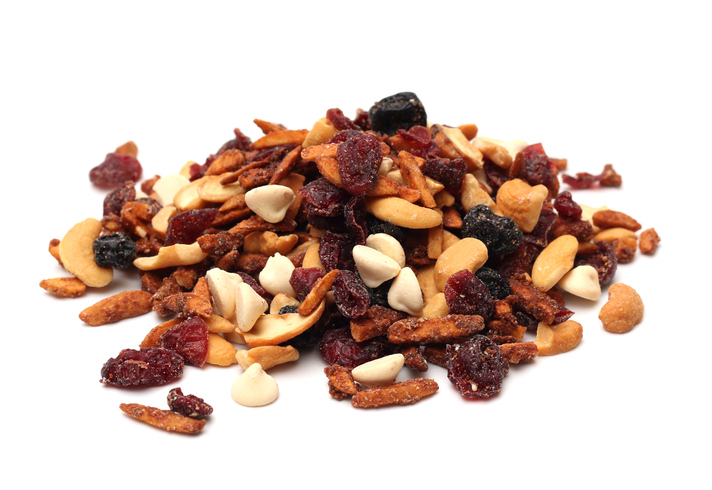
Good mixing options include:
- coconut shavings*
- pinenuts **
- pumpkin seeds
- sunflower seeds
- pomegranate seeds
- Omega seeds
Pair with
- dried fruit
- dried peas
- chickpeas
- pretzels
- croutons
- crackers
- cereal e.g. granola
- cheese lumps
- pickles such as gherkins
Please note:
*Coconut is a fruit, not a nut. It is not included in the UK 14 common allergens, as it is less common to cause an allergic reaction. Coconut-Factsheet.pdf
** Pinenuts are a kernel and are extremely rare to cause an allergic reaction. It is not included in the UK 14 common allergens. Pine-nuts-allergy-factsheet.pdf
3. Oatcakes and wholegrain crackers
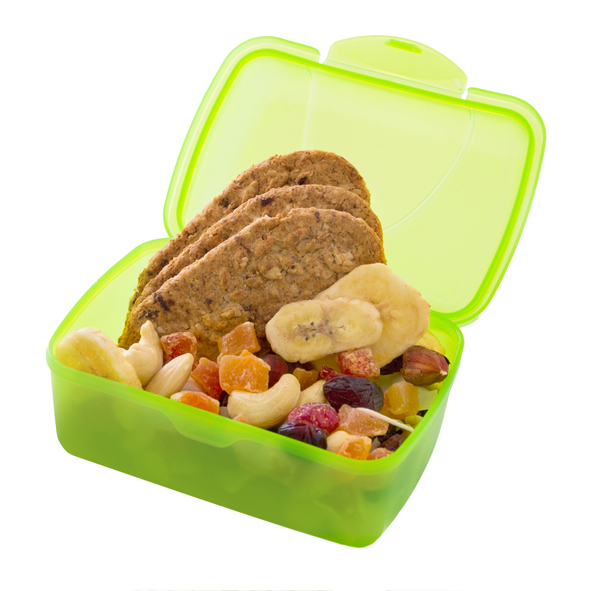
Oatcakes, rye crackers and other higher-fibre crackers can be useful when you want something that doesn’t require refrigeration. They can be eaten with foods such as:
- hummus
- reduced-fat cheese
- vegetable- or dairy-based dip
- dried fruit e.g. dried apricots or figs
They’re particularly useful with a combination of foods rather than as a snack on their own. Remember to choose low-fat accompaniments to reduce a high saturated fat intake, such as a low-fat dairy spread. Choosing accompaniments such as dairy spread and dried fruit can also help reduce salt intake when you eat more crackers, while providing different electrolytes to support kidney function and regulate your blood pressure.
4. Wholegrain sandwiches
A sandwich can be one of the most practical foods for a longer train journey. For a more balanced option, choose a higher-fibre or wholemeal bread and include a source of protein and some vegetables or salad. For example:
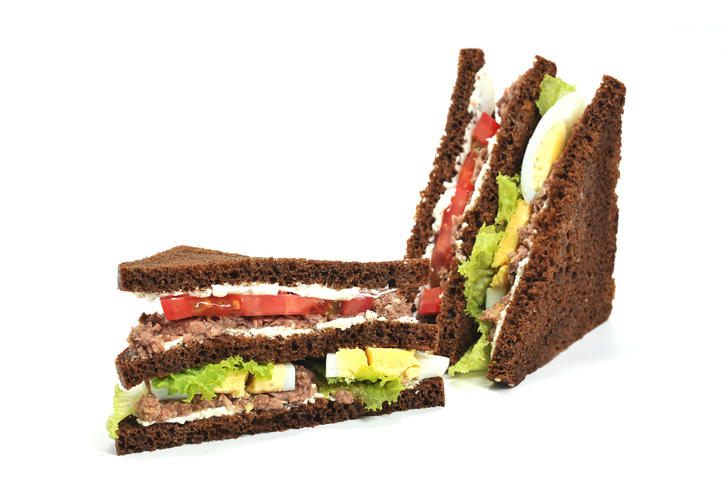
- chicken, tomato and rocket
- egg and cress
- tuna and sweetcorn
- hummus and roasted vegetables
- falafel and salad
Although sandwiches have received a bad rap of late, a sandwich with a higher-fibre carbohydrate, a protein source, and some vegetables can be a more nutrient-dense, satisfying option than confectionery or crisps for lunch or a snack. For a lower-calorie option, simple sandwiches such as egg and cress or tuna and sweetcorn make an excellent choice. Some outlets now offer lower-fat varieties as well.
Don’t forget to check the traffic light symbols on sandwich packs. A healthy sandwich shouldn’t be high (red) in fat, saturated fat or salt (HFSS). Choose those that are green or orange, indicating low or moderate HFSS levels, respectively.
Salt is often a hidden ingredient. Sandwiches with processed meats and cheese will be higher in salt. This may be important if you need to manage your blood pressure. So choosing lower-salt options, such as chicken, tuna, hummus and vegetables, will keep the salt content down.
5. Wraps
Wraps can work particularly well when you want variety on your regular journeys. They are relatively easy to eat without mess and offer a range of nutrients. They make excellent lunch options, and for those who need a higher-energy snack, such as very active people, they are a great option. Choose a higher-fibre wrap where available and look for fillings containing:
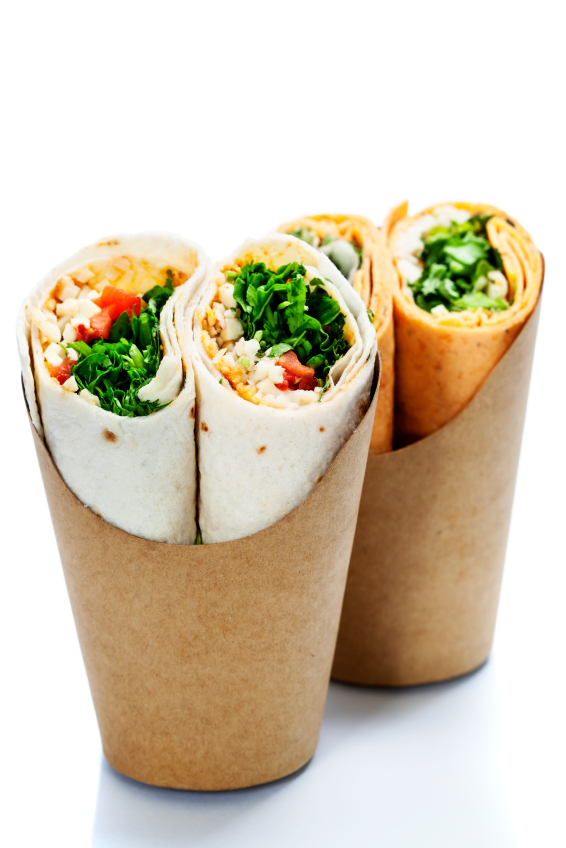
- chicken
- fish
- egg
- beans
- pulses
- hummus
- vegetables or salad.
Top tips for choosing a healthier wrap
- Avoid wraps with sauces, especially if you want something easy to eat without making a mess, such as Hoisin duck.
- Skip the deep-fried chicken, such as Chicken Katsu
- Aim for dark green leafy vegetables within, such as rocket or spinach, to increase the intake of essential nutrients.
- Choose wholemeal, spinach or tomato for added flavour, texture and nutrients
- Opt for something plant-based, e.g. Mexican beans, to increase the fibre
- Stay clear of a red salt traffic light
6. Yoghurt and dessert pots
Yoghurt can be a useful source of protein and calcium, but it requires more consideration when travelling. If you are taking yoghurt on a train, keep it appropriately chilled and consider how long it will be out of refrigeration. You can buy a variety of great containers nowadays. Such as pre-chill pots or even small coolers. These can fit in briefcases and handbags without the need to carry in a cooler.
A small pot of natural or lower-sugar yoghurt works well for a shorter journey, particularly alongside fruit or another breakfast food. However, yoghurt isn’t easy to consume standing up. So best enjoyed when you can reserve a seat with a table.
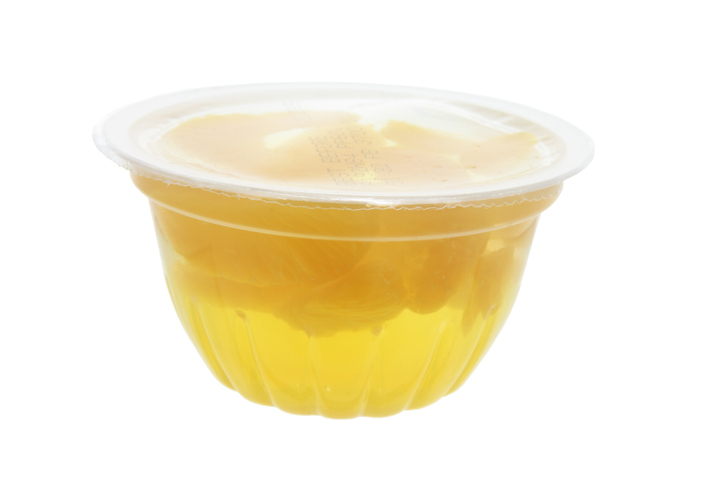
For longer journeys, commercially packaged products may be more practical if you cannot maintain appropriate chilled storage. These might include UHT items such as rice pudding, custard, fruit and jelly. Long-life yoghurt is also possible. Examples include Golden Acre Thick and Creamy Yoghurt and EasiYo yoghurt sachets.
7. Vegetable snacks
Vegetable sticks can be surprisingly useful train food. Often, we’re limited by our imaginations and culturally acceptable practices. One of my fondest memories as a Travel Nutritionist is travelling to and from Paris to explore food options for travellers. On one occasion, while travelling back to the UK on the Eurostar, I was joined by a group of French travellers at one of the four-seater tables. Much to my amazement, one of the travellers pulled out a pre-cooked packet of baby potatoes and shared it around. It hadn’t even occurred to me that this would be a possible snack.
You can start your journey into the world of travel vegetables with simple, fresh vegetable sticks or crudities. Try:
- carrots sticks
- cucumber slices
- sliced peppers
- sugar snap peas
- cherry tomatoes
- celery
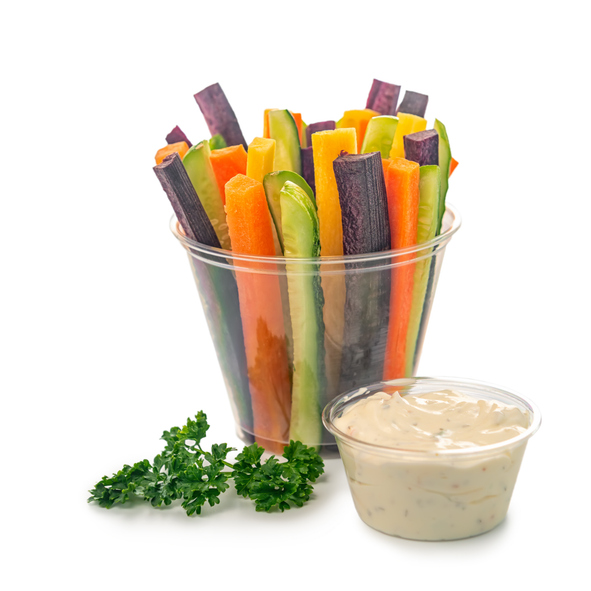
You can easily combine these with a suitable portion of hummus or another dip. You can either use a fresh dip from home and carry it in a small container, buy one on the route or have some long-life options available.
Homemade dips can vary considerably in storage requirements and shelf life. A fruit or plant-based salsa can last most of the day in a small container, whereas a dairy dip is best kept chilled. Plenty of suitable commercial options are available too; for example, supermarkets now stock vegetable stick and dip snack containers.
Long-life dips are another option. They are quick to grab from the pantry or cupboard. Examples include sachets of chilli dip, pesto, black olive tapenade, tomato and chilli tapenade, Olive, sun-dried tomato and caper tapenade or a small bottle of red pepper paste. Combined with a small roll, vegetable sticks and dips can be particularly useful if you’re travelling at lunchtime but don’t want a large meal. If you prefer to make homemade options rather than buy processed ones, then check out our recipe section.
The suggestions above will give you some options. The best advice is simply to raid the larder or cupboard the night before. If you’re not well stocked with options, then a supermarket sweep the weekend or day before will turn up a variety of small treasures suitable for a short train trip. And if you’ve left it to the last minute, there’s no need to panic. It is surprising what you can find in local shops near a train station nowadays that will be suitable to keep with you. However, when possible, it’s best to avoid a panic purchase at the station, as healthier options are usually more limited.
FAQs
What is the best healthy food to take on a train?
Portable foods such as whole fruit, unsalted nuts, wholegrain sandwiches or wraps, oatcakes and suitable packaged snacks can work well. For longer journeys, consider taking a more substantial meal as well as snacks
What are the best snacks for train journeys?
Fresh fruit, unsalted nuts, seeds, oatcakes, vegetable sticks, yoghurt and suitable lower-sugar packaged snacks can all work well, depending on storage requirements and the length of the journey.
What food can I take on a train without refrigeration?
Foods such as whole fruit, unsalted nuts and seeds, oatcakes, wholegrain crackers and many commercially packaged foods can be suitable when refrigeration isn’t required. Always check the packaging and storage instructions for individual products.
How can I eat healthily on a train if I haven’t brought food?
Look at the food available at the station or onboard and try to combine a source of protein, a higher-fibre carbohydrate and some fruit or vegetables. Water is usually a straightforward drink choice.
© 2026 Healthy Food on the Go
Author: Kathy Lewis R.Nutr.,